Language
  EN
EN ES
ES RU
RU DE
DE EL
EL IT
IT JA
JA KO
KO PT
PT ID
ID SR
SR UK
UK VI
VI TH
TH TR
TR MS
MS BE
BE AR
AR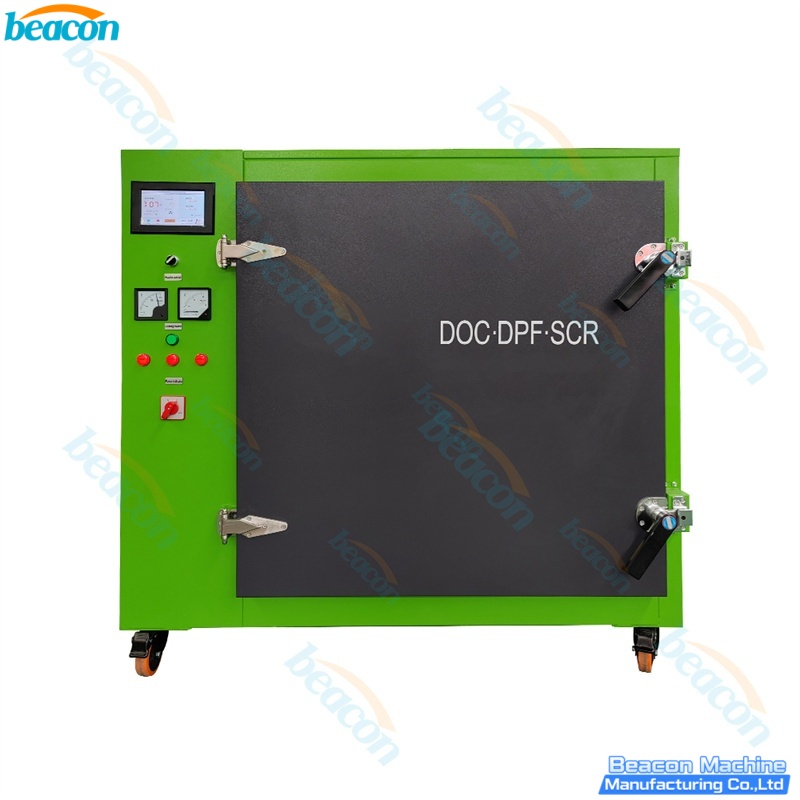
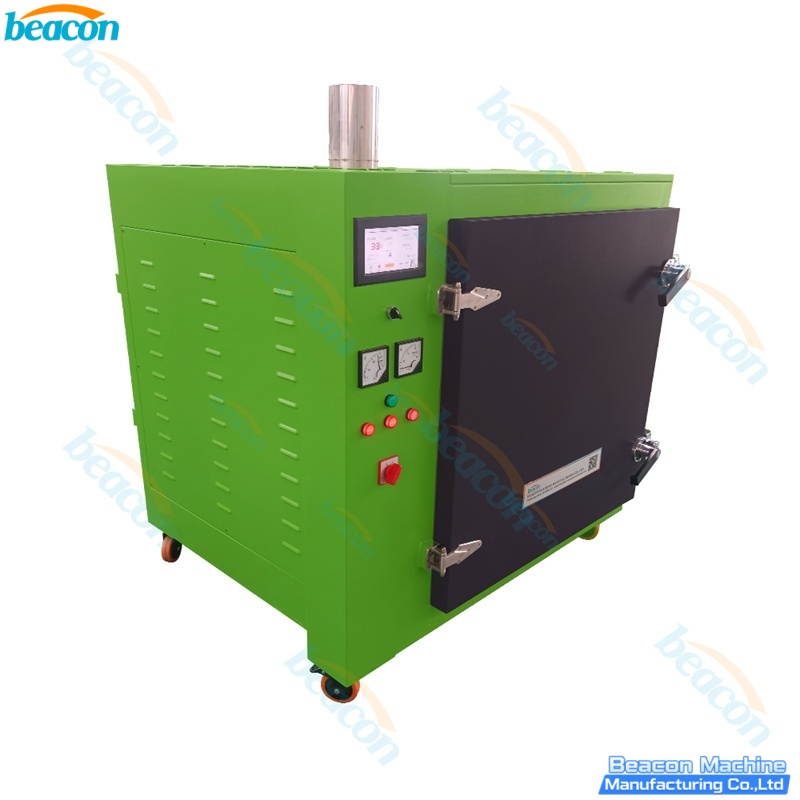
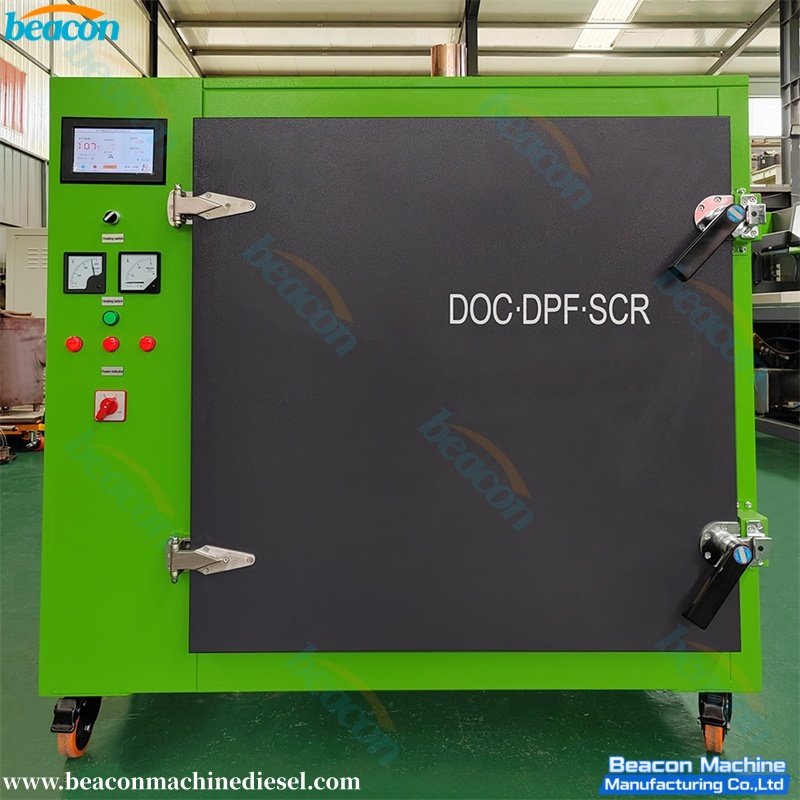
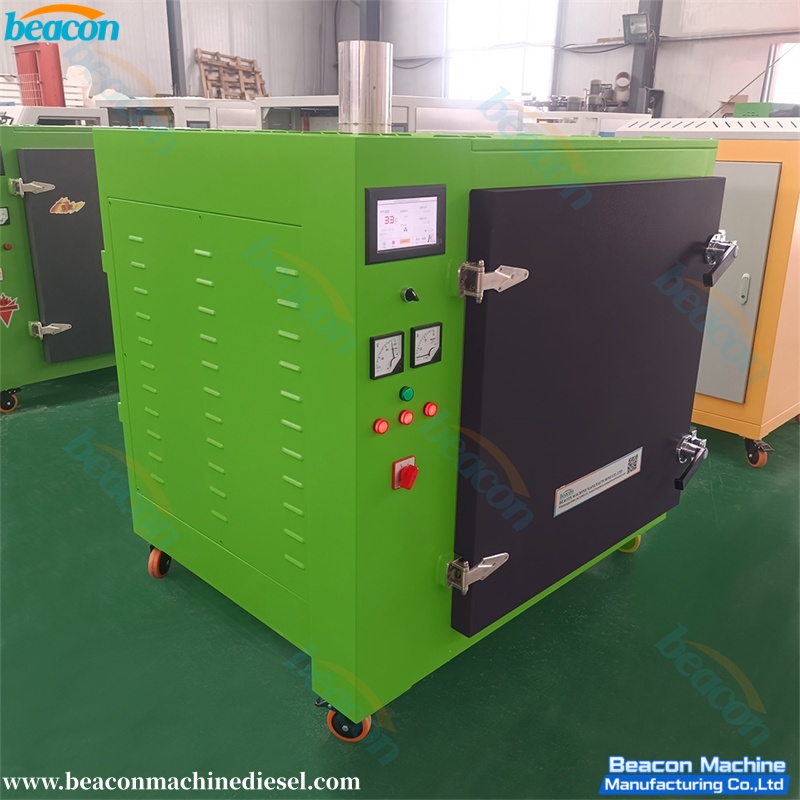
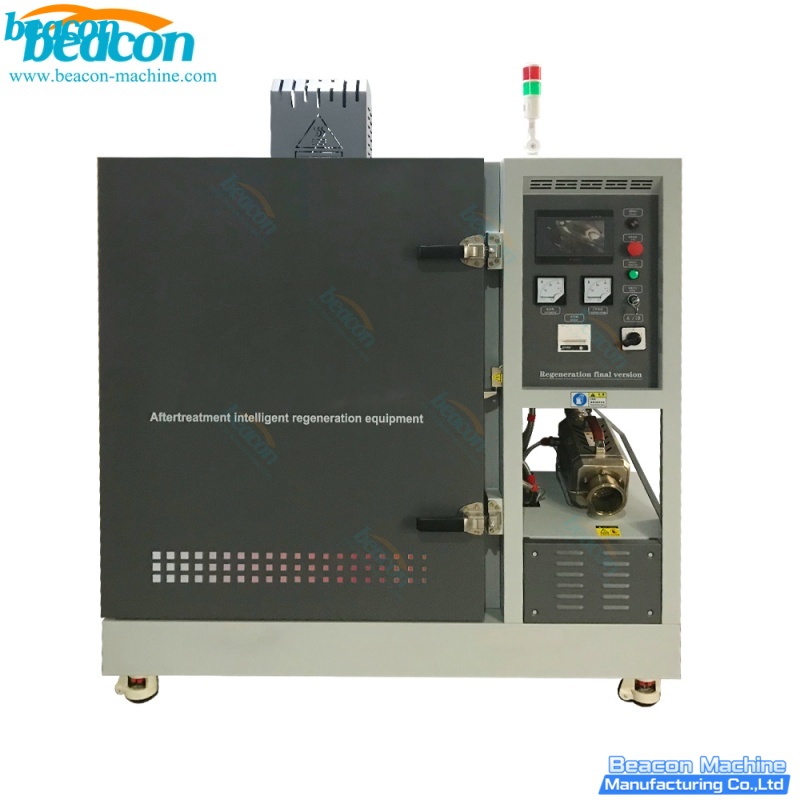
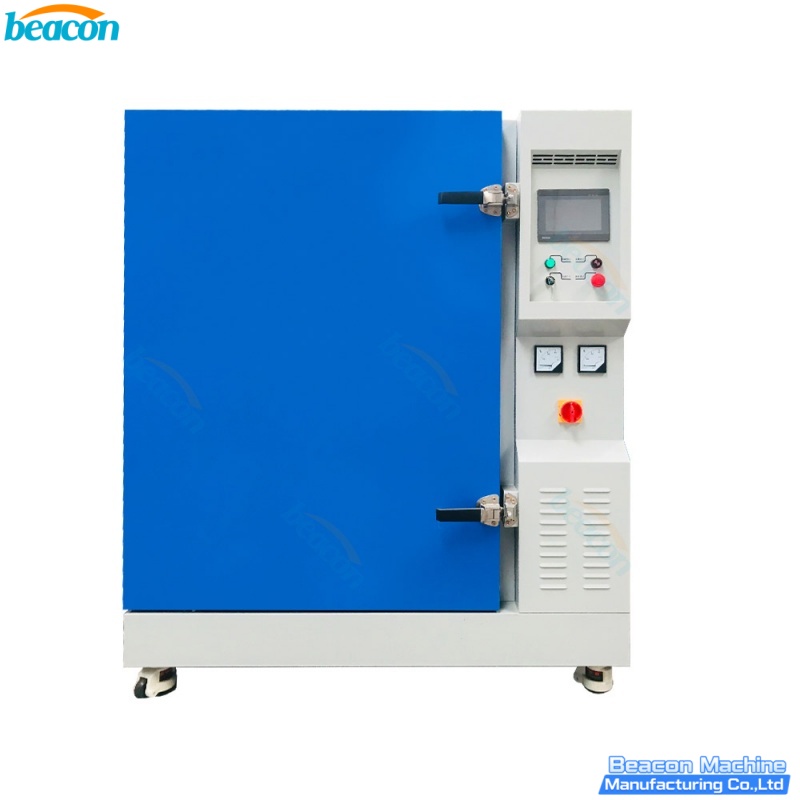
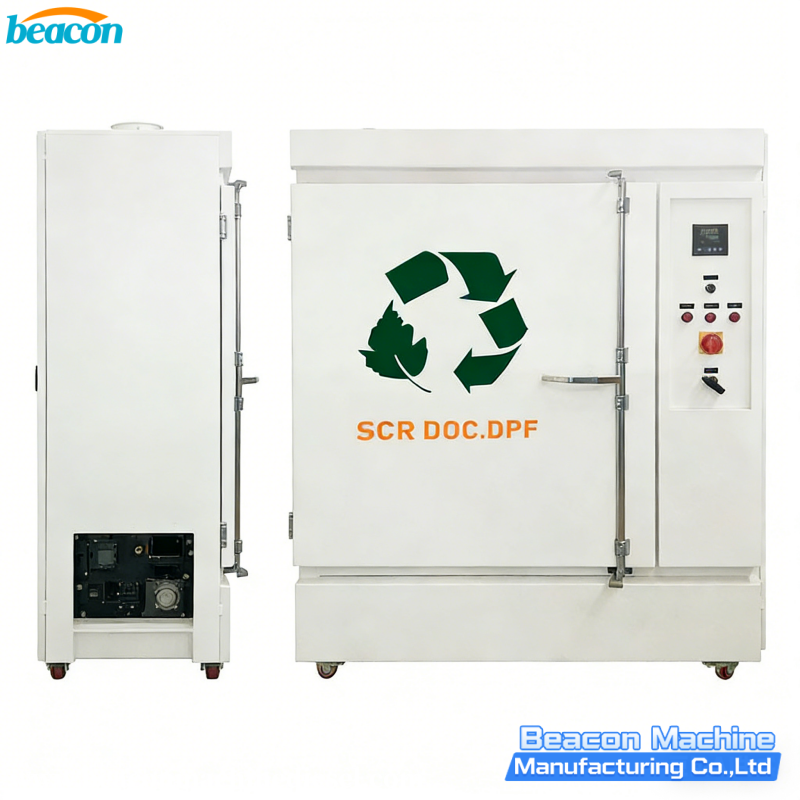
DPF-RGF Diesel Particulate Filter Cleaner SCR High Temperature System Regeneration Cleaning Machine
Click the WhatsApp button to chat, or leave a message, and we will contact you within 12 hours.
Details
DPF-RGF Diesel Particulate Filter Cleaner SCR High Temperature System Regeneration Cleaning Machine
Equipment principle
The full English name of DPF is "Diesel Particulate Filter", which literally translates to "diesel particulate filter", also called diesel particulate capture regenerator. It is a device that can reduce the emission of particulate matter (PM) in the exhaust. During the working process of the trap, particles will accumulate in the filter. When it reaches a certain value, it will cause the engine's power and economic performance to decline. The deposited particles must be removed in time to ensure that the DPF continues to work normally. It is the so-called DPF regeneration.
DPF is also called wall-flow particle trap. Its core function is that after engine exhaust passes through DPF, gaseous pollutants can flow out through the pore wall, and particles are trapped inside the DPF by the pore wall. Then, under certain conditions, the carbon (C) particles are converted into gaseous substances and discharged. The core of the diesel engine exhaust carbon particles (soot) collected in the DPF is solid carbon (C),and the outside contains polymers produced by incomplete engine combustion. In layman's terms, its role is to collect the carbon particles in the exhaust first, and then concentrate them to a certain extent, to convert exhaust pollutants into non-polluting gases.
Equipment principle
The full English name of DPF is "Diesel Particulate Filter", which literally translates to "diesel particulate filter", also called diesel particulate capture regenerator. It is a device that can reduce the emission of particulate matter (PM) in the exhaust. During the working process of the trap, particles will accumulate in the filter. When it reaches a certain value, it will cause the engine's power and economic performance to decline. The deposited particles must be removed in time to ensure that the DPF continues to work normally. It is the so-called DPF regeneration.
DPF is also called wall-flow particle trap. Its core function is that after engine exhaust passes through DPF, gaseous pollutants can flow out through the pore wall, and particles are trapped inside the DPF by the pore wall. Then, under certain conditions, the carbon (C) particles are converted into gaseous substances and discharged. The core of the diesel engine exhaust carbon particles (soot) collected in the DPF is solid carbon (C),and the outside contains polymers produced by incomplete engine combustion. In layman's terms, its role is to collect the carbon particles in the exhaust first, and then concentrate them to a certain extent, to convert exhaust pollutants into non-polluting gases.
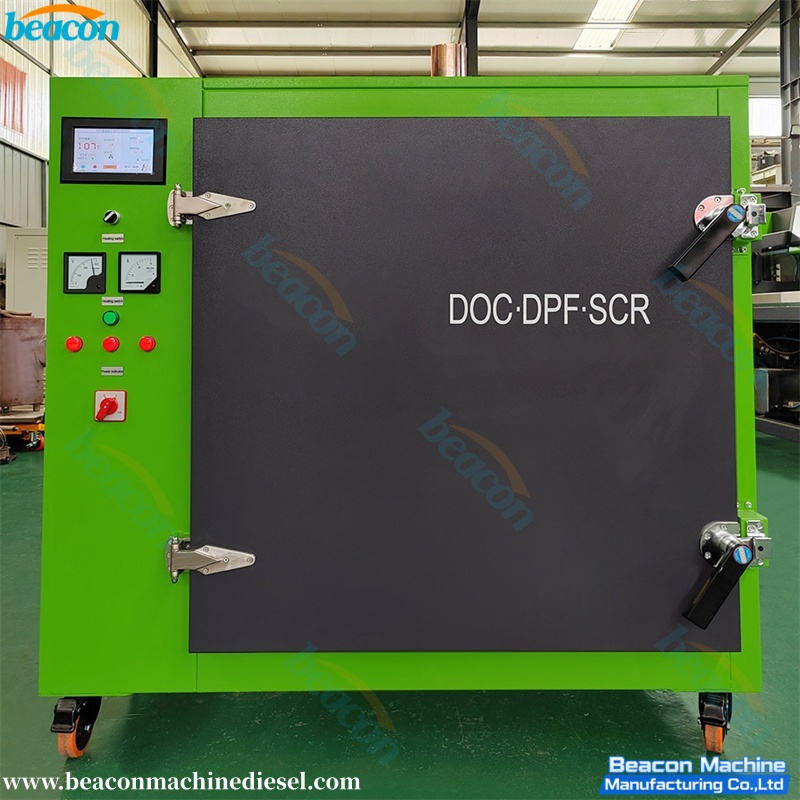
DPF-RGF Diesel Particulate Filter Cleaner SCR High Temperature System Regeneration Cleaning Machine Advantage
DPF-RGF Diesel Particulate Filter Cleaner SCR High Temperature System Regeneration Cleaning Machine
Main function
The realization of DPF's function in the whole vehicle mainly has two parts, namely the capture of carbon particles and the reaction treatment of carbon particles. DPF generally adopts a wall-flow filter, which relies on alternately blocking the inlet and outlet of the carrier holes and forcing the airflow through the porous wall to achieve particle capture. The front-stage DOC catalyst oxidizes the NO produced by the combustion in the diesel engine cylinder to produce NO2. After entering the DPF, the NO2 molecular bond can be broken at a relatively low temperature (about 250°C), and the generated oxygen will combust with the captured C particles to form CO2. Most ordinary driving conditions of diesel engine can meet the regeneration temperature (250℃~500℃) in DPF, so PM can be effectively removed. In the particle trap, electric heating is used to generate high temperature, and the trapped particles are burned into CO2 and discharged.
Main function
The realization of DPF's function in the whole vehicle mainly has two parts, namely the capture of carbon particles and the reaction treatment of carbon particles. DPF generally adopts a wall-flow filter, which relies on alternately blocking the inlet and outlet of the carrier holes and forcing the airflow through the porous wall to achieve particle capture. The front-stage DOC catalyst oxidizes the NO produced by the combustion in the diesel engine cylinder to produce NO2. After entering the DPF, the NO2 molecular bond can be broken at a relatively low temperature (about 250°C), and the generated oxygen will combust with the captured C particles to form CO2. Most ordinary driving conditions of diesel engine can meet the regeneration temperature (250℃~500℃) in DPF, so PM can be effectively removed. In the particle trap, electric heating is used to generate high temperature, and the trapped particles are burned into CO2 and discharged.
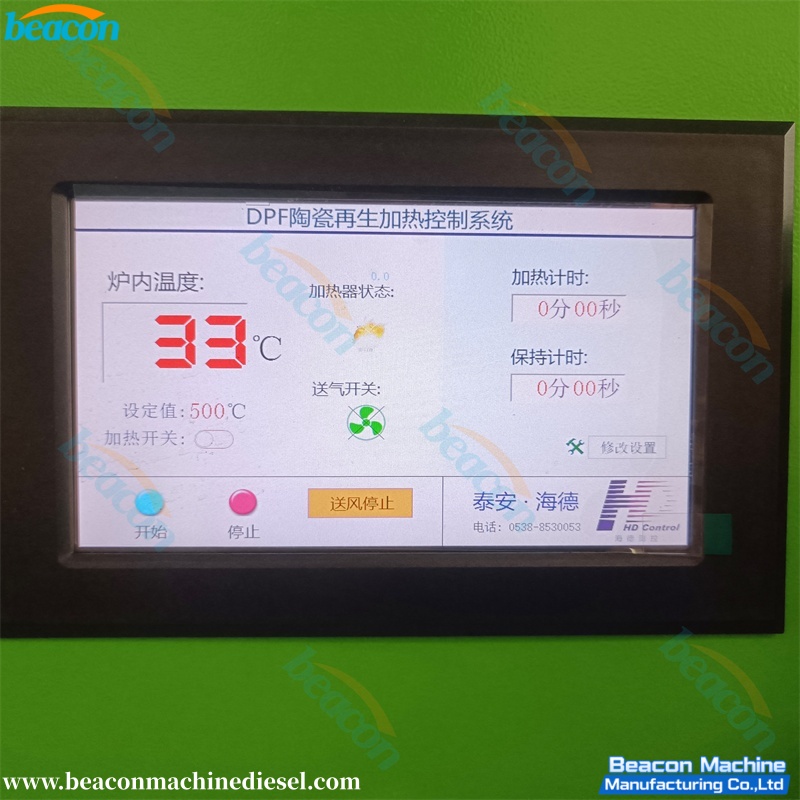
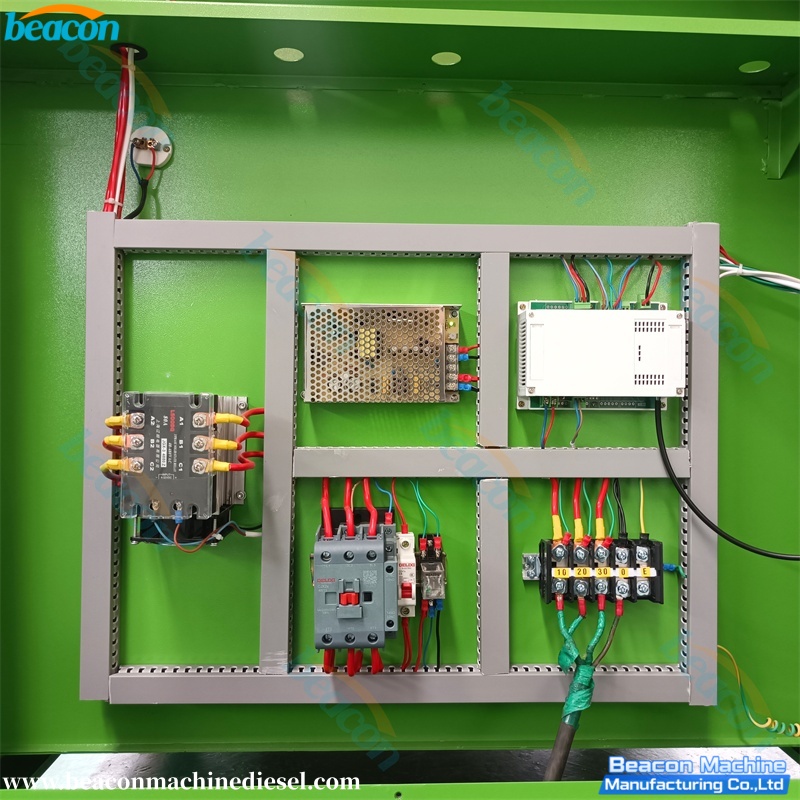
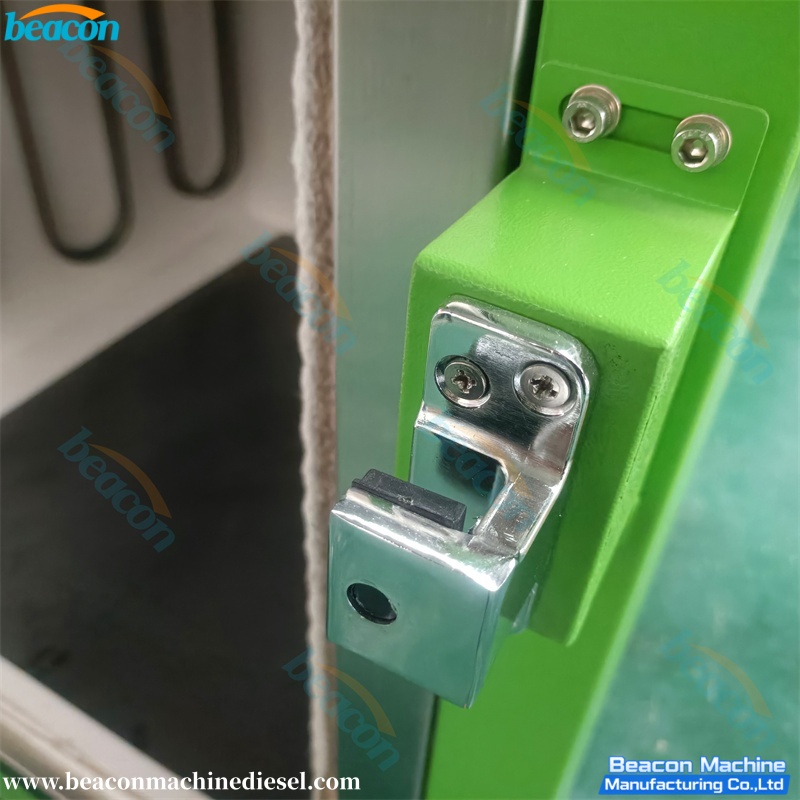
parameter
Specification
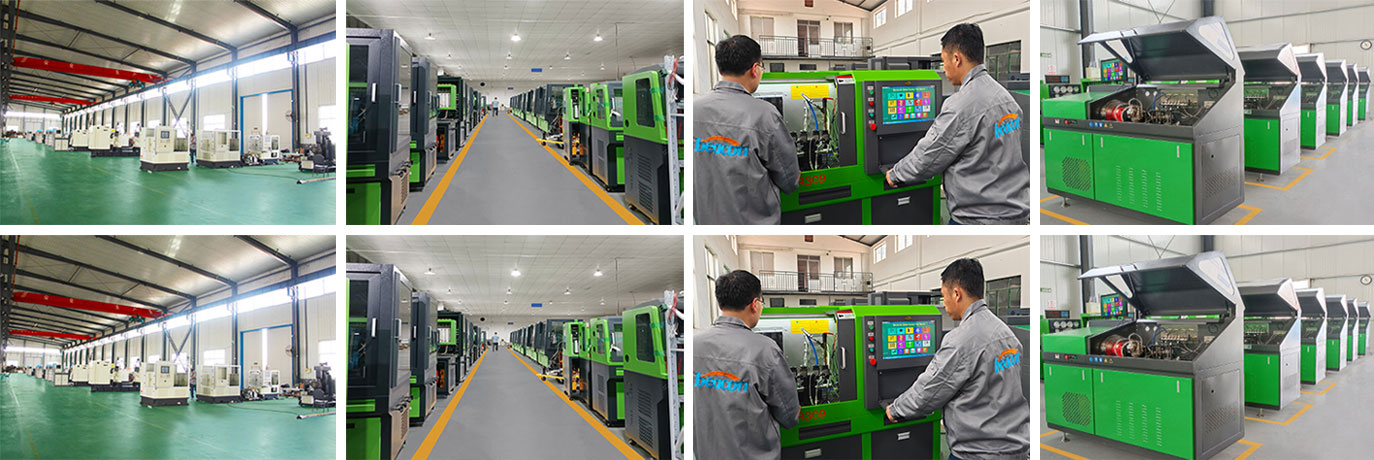
Our factory
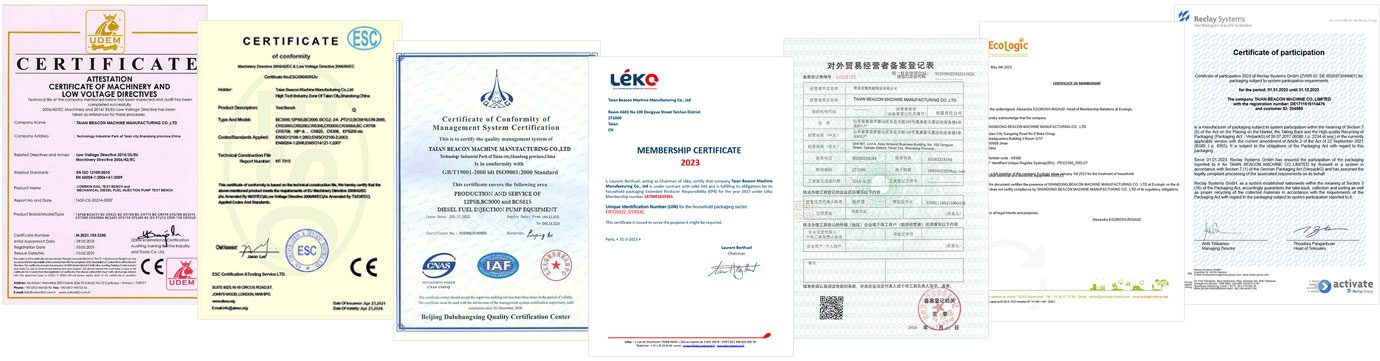
Certification
Our Customers

VIEWS:405 Times
Get in touch
We'll get in touch with you via WhatsApp or email in 12 hours.
about beacon
PRODUCTS
contact us
TEL: 0086-13375386297
WhatsApp:+86-13375386297
Email: jamesjing@beacon-machine.com
Add: High Technology Industrial Park of Taian city,Shandong province,China