Language
 EN
 ES
 RU
 DE
 EL
 IT
 JA
 KO
 PT
 ID
 SR
 UK
 VI
 TH
 TR
 MS
 BE
 AR
Euro 6 Injector Repair: What Fails, What Can Be Reconditioned, and How to Prove It on the Test Bench
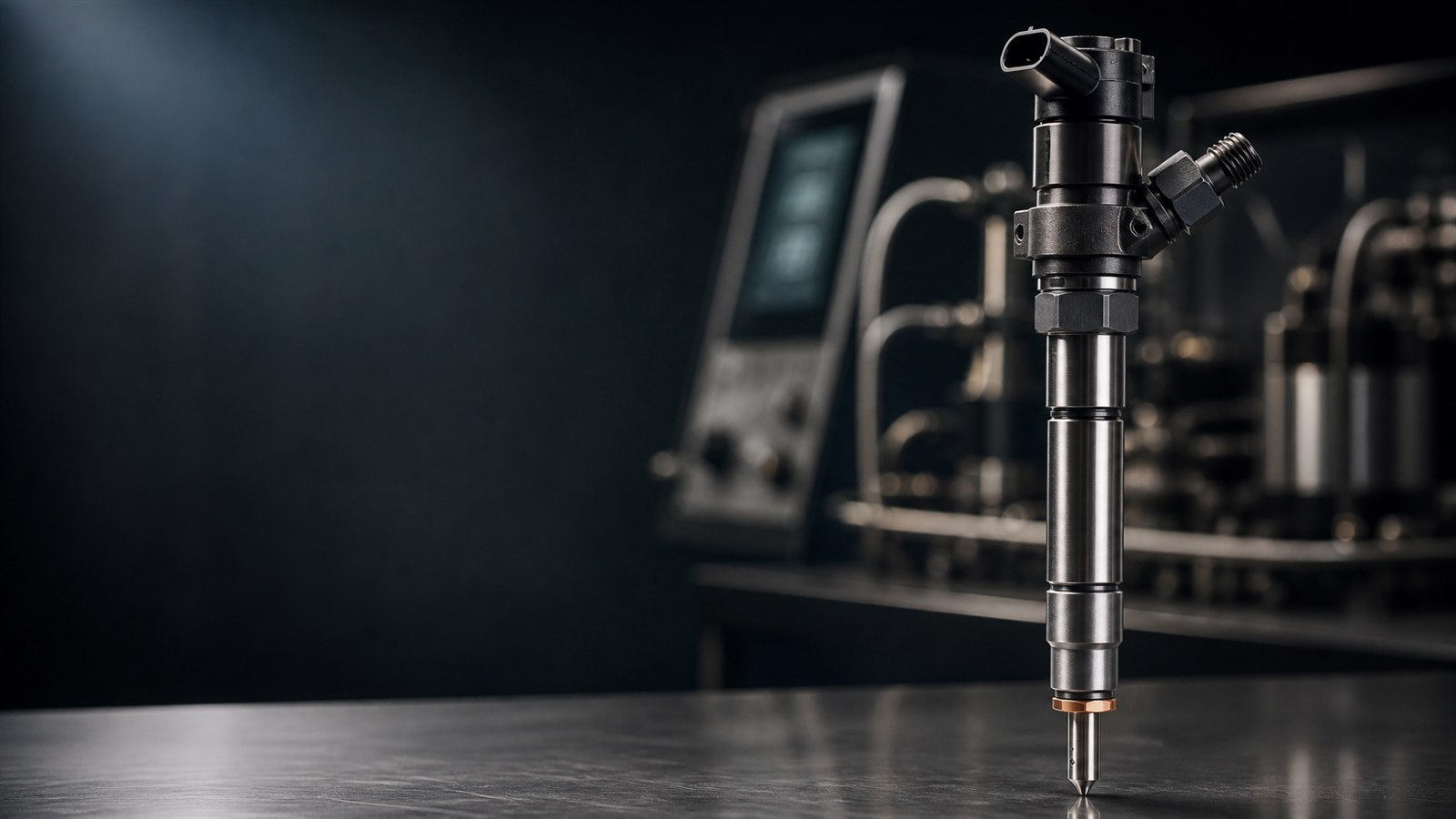
A Euro 6 diesel that comes in with a misfire, a rising oil level or a DPF warning every three weeks is usually telling you the same thing: one or more injectors are no longer delivering what the ECU expects. What makes Euro 6 different from the Euro 4 and Euro 5 engines most workshops learned on is not the principle — it is the margin. Rail pressure is higher, the injection strategy is denser, the emission hardware downstream is far less tolerant of a rich or late combustion event, and the correction code in the ECU assumes the injector is behaving exactly as its calibration says.
This guide is written for the shop that already owns a common rail test bench and wants to turn Euro 6 injector work into a repeatable repair, not a guess. It covers what actually fails in these injectors, which cases can be reconditioned and which cannot, how to build a test plan that proves the repair, and what the bench itself has to be able to do before you accept the job.
1. Why Euro 6 injectors fail differently
Four changes separate a Euro 6 injector from an earlier one, and each of them moves the failure mode:
Higher rail pressure. Euro 6 common rail systems run in the 2 000-2 500 bar range. Every extra 100 bar increases the load on the control valve seat, the nozzle seat and the injector body, and it accelerates erosion wherever the fuel velocity is highest — which is precisely the metering gap of the control valve.
More injection events per cycle. A Euro 6 calibration typically uses several pilot injections, a main injection and one or more post injections for DPF regeneration. Each event is another open-close cycle on the control valve. Multiply by engine speed and the valve can see hundreds of millions of cycles in a service life, all of them at pressure.
Piezo and sensor-equipped injectors. Part of the Euro 6 fleet uses piezo actuators instead of solenoids, and some platforms use injectors with an integrated pressure sensor. These are repairable, but the failure analysis and the tooling are different, and one of them (the sensor type) cannot be repaired at component level at all.
An emission system that punishes small errors. A slightly over-fuelling injector on a Euro 3 engine produced smoke. On a Euro 6 engine it produces soot that the DPF has to burn off, extra diesel that ends up in the sump during post-injection, and eventually a derate. Small injector errors now have expensive consequences, which is why the acceptance test matters more than the repair itself.
2. The four Euro 6 injector families you will meet
Almost every Euro 6 injector that reaches a workshop bench belongs to one of four families. The repair route and the coding step depend on which one is in your hand.
| Family | Drive | Typical rail pressure | Coding after service | Repairable at component level |
|---|---|---|---|---|
| Bosch CRI 2.x / 3.x (solenoid) | Solenoid, control valve | 1 800-2 500 bar | IMA / ISA code | Yes — nozzle, control valve, seals |
| Bosch and Continental piezo | Piezo stack, hydraulic coupler | 1 800-2 500 bar | IIC / IMA-type code | Partly — nozzle and coupler yes, stack only with qualified parts |
| Denso (incl. i-ART with integral pressure sensor) | Solenoid, some with built-in sensor | 2 000-2 500 bar | IQA / ISCC code | Nozzle yes; sensor-equipped units are replace-only |
| Delphi DFI | Solenoid | 1 800-2 000 bar | C2I / C3I code | Yes — nozzle and valve, with Delphi-specific tools |
Two practical notes. First, the code name matters: IMA, IQA/ISCC, C2I/C3I and IIC are not interchangeable, and a bench that can only generate one of them will leave you handwriting codes or sending work away. Second, piezo injectors are not characterised by resistance — they are capacitive, so a multimeter resistance test tells you almost nothing. Testing them means driving them properly and reading the hydraulic result, not measuring a coil.
3. What actually fails inside a Euro 6 injector
Strip the marketing out of the failure reports and the same six mechanisms account for nearly all Euro 6 injector faults:
Control valve seat erosion. The most common failure on solenoid injectors. Microscopic erosion and cavitation damage at the valve seat let fuel escape from the control chamber continuously, so the needle no longer opens and closes cleanly. The visible symptom is rising return flow together with unstable delivered quantity.
Nozzle and needle wear. Abrasive particles that pass the filter, plus fuel with reduced lubricity, wear the needle guide and the seat. Spray quality degrades before the flow number changes, which is why a bench that only measures quantity will pass an injector that smokes.
Internal deposit build-up. Varnish and carbon form on the valve and nozzle, especially on engines doing short cycles where the injector never reaches a stable temperature. Deposits change the hydraulic response long before metal wears.
Piezo stack degradation. The stack loses stroke or develops internal leakage, the injector becomes slow, and the ECU's correction window runs out. Connector corrosion and damaged insulation are a close second, and both are visible before the injector is opened.
Sensor drift on sensor-equipped injectors. Where the injector carries its own pressure sensor, drift in that sensor corrupts the per-cylinder feedback the ECU relies on. There is no field repair — the unit is replaced.
Body and thread damage. Over-torqued clamp bolts, cross-threaded high-pressure unions and cracked bodies from hydraulic shock. These are inspection items, not bench items: if the body is cracked or a thread is pulled, the injector is scrap regardless of what the hydraulics say.
4. Read the evidence before you open anything
The vehicle still gives you most of the diagnosis, and it is faster than the bench. Collect these before the injector comes out:
Correction values per cylinder at idle, at 1 500 rpm and under load. One cylinder outside the others by a wide margin, or a correction that keeps climbing as the engine warms, points at that injector rather than at compression or the pump.
Return flow measured at the leak-off lines, compared against the value for that part number — not against a generic figure. A Euro 6 injector with normal quantity but high return flow is on its way out.
DPF behaviour. Shortened regeneration intervals, rising soot mass estimates and a soot load that will not come down are classic signs of an over-fuelling injector. Do not replace a DPF before the injectors have been proven.
Oil level and oil analysis. A rising level with a diesel smell means post-injection fuel is reaching the sump, usually through a leaking injector or an injector that is being commanded far too long.
Fuel condition. Water, debris and biological contamination in the tank will destroy a freshly repaired set in a few thousand kilometres. If the filter is loaded with rust, stop and quote the fuel system job as well.
Fault codes and freeze frames for rail pressure deviation, cylinder imbalance and injection quantity. Record them — you will need the same parameters to prove the fault is gone.
5. Recondition or replace — the decision table
Not every injector should be repaired, and a shop that repairs everything eventually ships a comeback. Use the condition, not the customer's budget, to make the call.
| Condition found | Repairable? | Recommended action |
|---|---|---|
| Internal deposits only, all hydraulic values within tolerance after cleaning | No repair needed | Clean, re-test, refit with new seals, reset adaptations |
| Worn nozzle, valve seat and body within limits | Yes | New nozzle and valve group, set opening pressure and stroke, generate new code, bench validate |
| Eroded control valve seat with a serviceable body | Yes | Replace valve group as a matched set, re-check return flow at full rail pressure |
| Piezo stack out of specification, connector intact | Only with qualified parts | Replace the stack or the complete hydraulic module; capacitance and stroke must be re-verified |
| Sensor-equipped injector with drifting sensor | No | Replace the injector, code it, verify per-cylinder feedback |
| Cracked body, pulled thread or corroded high-pressure seat | No | Replace; do not attempt to reclaim the body |
| Fuel contamination present in the system | Not until the system is clean | Flush tank, lines, rail and pump first; otherwise the repaired set fails again |
6. The reconditioning sequence that holds up
Record everything first. Part number, code currently in the ECU, return flow and quantity before disassembly. A repair with no "before" number cannot be defended later.
External clean, then strip. Clean the outside before opening anything; grit that enters the body during disassembly ends up in the control valve.
Ultrasonic clean and assess. Clean the nozzle and valve parts, then inspect seats and guides under magnification. If the valve seat shows erosion, the repair is a valve group, not a polish.
Lap or replace, never "adjust". Nozzle seats are lapped only when the seat is serviceable; otherwise the nozzle is replaced as a matched assembly. Mixing needle and body from different sets is how a repair becomes a comeback.
Set opening pressure and stroke. Follow the part-number data, not a rule of thumb from an older engine family.
Assemble with correct torque and new seals. Every seal, O-ring and combustion washer is single-use. Reusing a crushed copper washer is the single most common cause of a leaking injector seat and a coked tip.
Generate the correction code. The injector now has different hydraulic behaviour; the ECU must be told. Write the new IMA, IQA/ISCC, C2I/C3I or IIC value into the vehicle and keep a copy on the job sheet.
Validate on the bench, then on the vehicle. Bench first: quantity at the specified test points, return flow, response time, seal. Vehicle second: idle correction values, then a loaded road test with the DPF strategy active.
7. What the test plan has to prove
A pass/fail on one delivery point is not a Euro 6 test. The injector has to demonstrate the same behaviour the ECU will command on the road:
Return flow / back-leakage at full rail pressure — the fastest way to catch a valve seat that is already leaking.
Pilot, main and full-load quantities at several pressure and pulse-width points, compared with the part-number data. A single-point test hides exactly the region where Euro 6 calibrations spend most of their time.
Cranking quantity and seal integrity — a leaking injector that looks acceptable when hot will still cause a long crank from cold.
Electrical values — solenoid resistance, or piezo capacitance and stroke for piezo units, plus injector response time.
Dynamic travel where the platform uses it, and a generated correction code that the vehicle will accept.
On the BEACON side, that combination is covered by benches built for exactly this work: the EPS209 coding bench runs a Bosch common rail pump to 2 000 bar, carries a database of more than 7 700 injector part numbers, tests pre-injection, maximum, cranking, average and return-flow quantities plus seal performance, and generates IMA, ISA, C2I and C3I codes. The CR309B adds piezo coverage, flow-sensing measurement of response time, injector resistance testing and compensation-code generation, with dynamic travel available as an option. For piezo calibration work the CR318T provides 0-2 000 bar rail pressure with piezo injector calibration.
One specification point deserves attention before you buy or accept a job: Euro 6 platforms vary in their maximum rail pressure, and some calibrations include test points above 2 000 bar. Check the rated pressure of the bench against the test plan for the specific injector family, and confirm the configuration with the manufacturer when a platform needs more. A bench that cannot reach the specified point cannot prove the repair at that point.
8. Five mistakes that make a Euro 6 repair fail
Skipping the code. A repaired injector with the old IMA or IQA value in the ECU will run, and will run badly. Coding is part of the repair, not an optional finishing step.
Reusing the combustion washer or the clamp bolt. Both are single-use on most Euro 6 platforms. Reused hardware causes seat leakage, compression blow-by and a coked tip within a few thousand kilometres.
Repairing one injector of a set. On a high-mileage engine the other three are at the same wear point. Quote the set, or at least test all four and show the customer the numbers.
Testing at one point. An injector can pass a single-point quantity test and still be unusable in the pilot-injection region where the idle and the DPF strategy live.
Ignoring the fuel system. Water and debris upstream will destroy the repair. Tank, lines, filter housing and high-pressure pump condition are part of the job.
9. What this means for the workshop
Euro 6 injector repair is a specification business. The injector families are known, the failure modes are known, the codes are known, and the acceptance criteria are published by the manufacturer. What separates a shop that makes money on this work from one that does not is whether it can prove the result on the bench before the injector goes back on the engine — and whether it charges for that proof.
A practical setup for a shop moving into Euro 6 work: one coding-capable common rail bench with a current injector database and piezo support, a clean assembly area with filtered air and single-use seal stock, a torque-controlled assembly routine, and a job sheet that records the before-and-after values for every injector. That is the difference between a repair the customer trusts and one you hope does not come back.
For the full range of common rail injector test benches, including coding-capable and piezo-capable models, see the common rail injector test bench category or contact BEACON MACHINE with the injector part numbers you see most often, and we will match the bench configuration to that mix.
References
— ISO 898-1 and manufacturer torque specifications for injector clamp and high-pressure union fasteners.
— Bosch, Denso, Delphi and Continental service documentation for IMA, IQA/ISCC, C2I/C3I and IIC injector coding.
— BEACON MACHINE EPS209, CR309B and CR318T product specification documents.
Related products

G4-106 DPF F2P injector Disassembly Tool
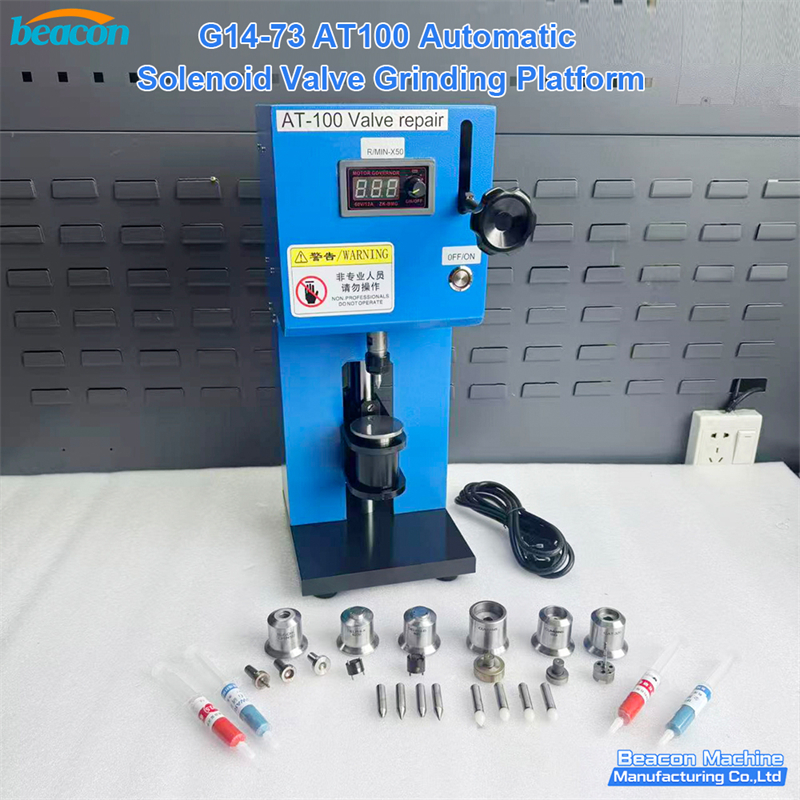
G14-73 AT100 Automatic Electronically Controlled Valve Lapping Platform
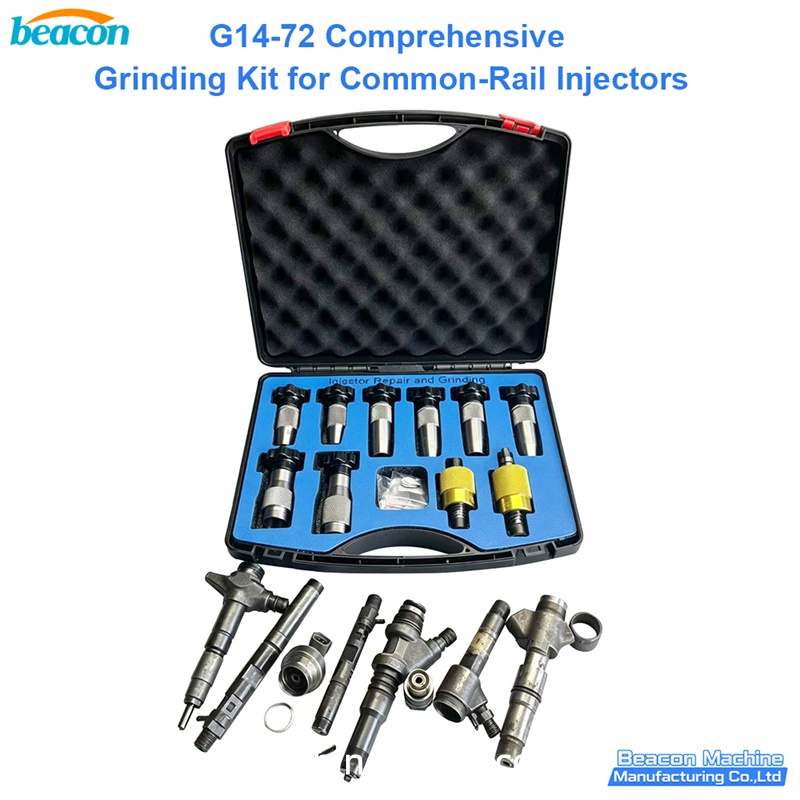
G14‑72 Common Rail Injector Lapping Repair Kit
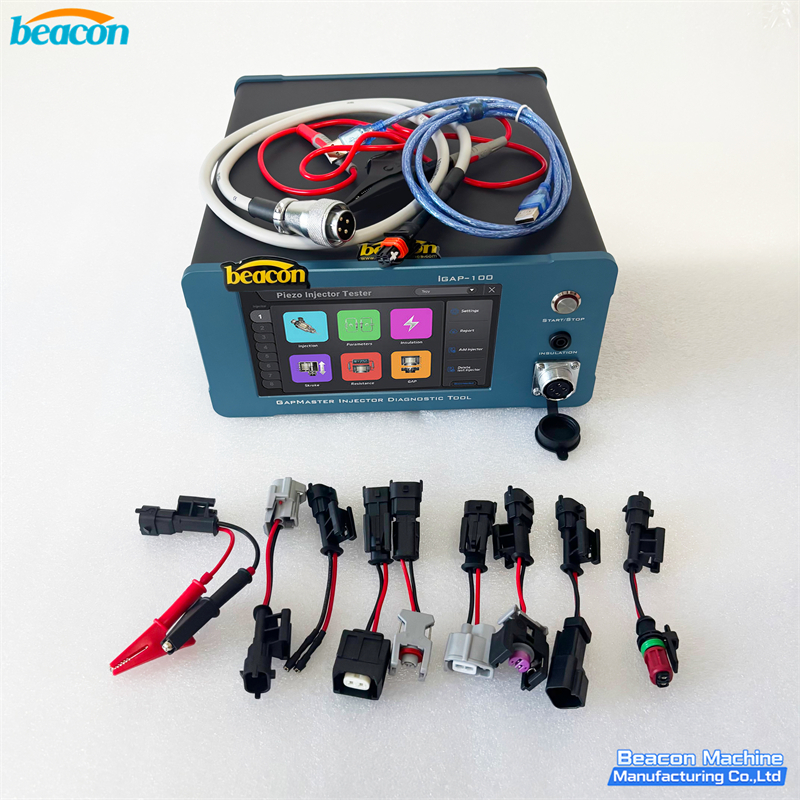
IGAP-100 Solenoid common rail injectors Tester
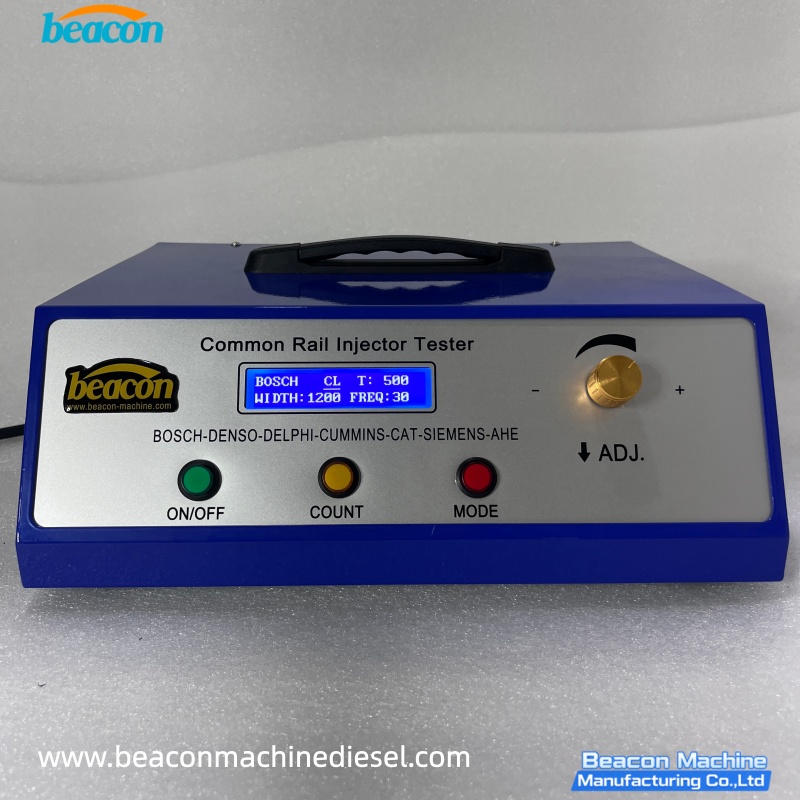
Cr1000 Portable Common Rail Injector Repair Tester
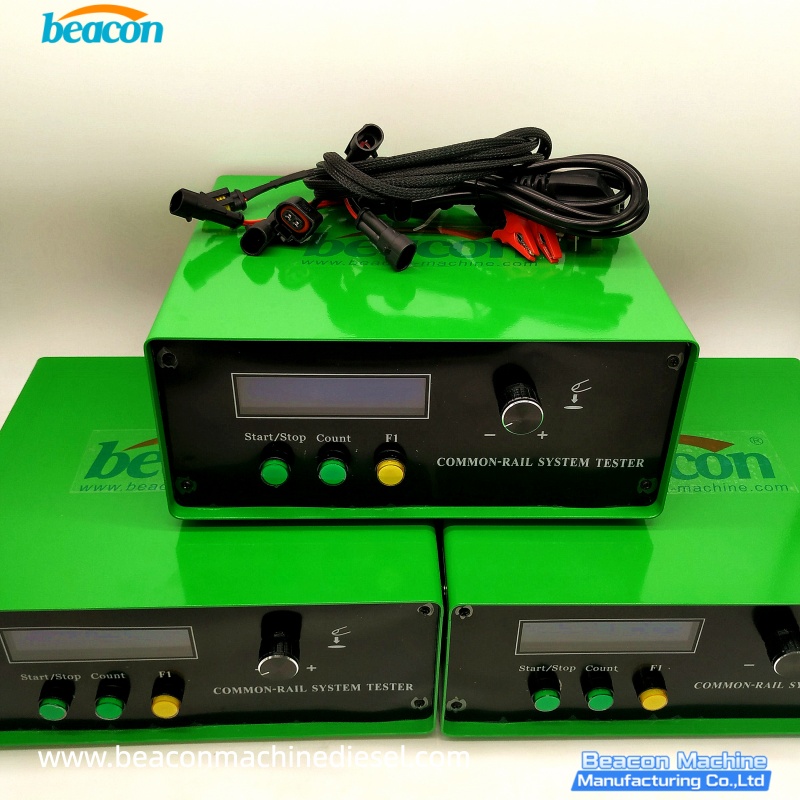
Cr1000 Bosch Delphi Denso Piezo Injector Tester
We'll get in touch with you via WhatsApp or email in 12 hours.
about beacon
PRODUCTS
contact us
TEL: 0086-13375386297
WhatsApp:+86-13375386297
Email: jamesjing@beacon-machine.com
Add: High Technology Industrial Park of Taian city,Shandong province,China